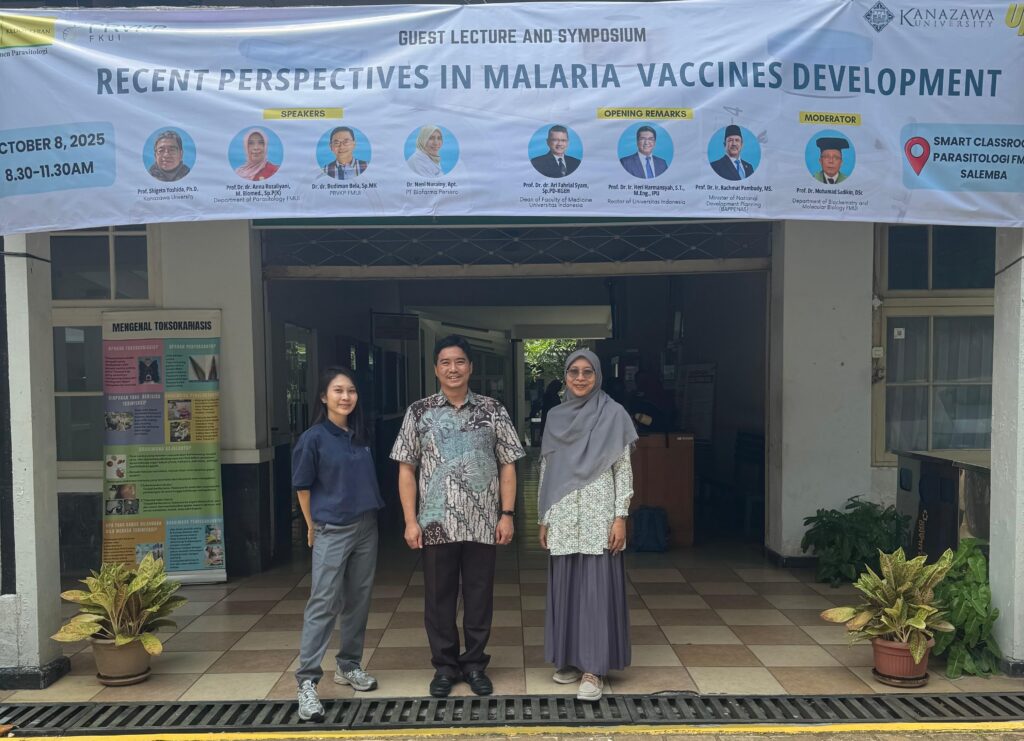
Malaria remains a major global health challenge, especially in tropical countries like Indonesia. Despite ongoing control efforts using drugs, insecticides, and vector management, resistance among parasites and mosquitoes continues to rise. This has created an urgent need for new prevention strategies, particularly effective and long-lasting vaccines.
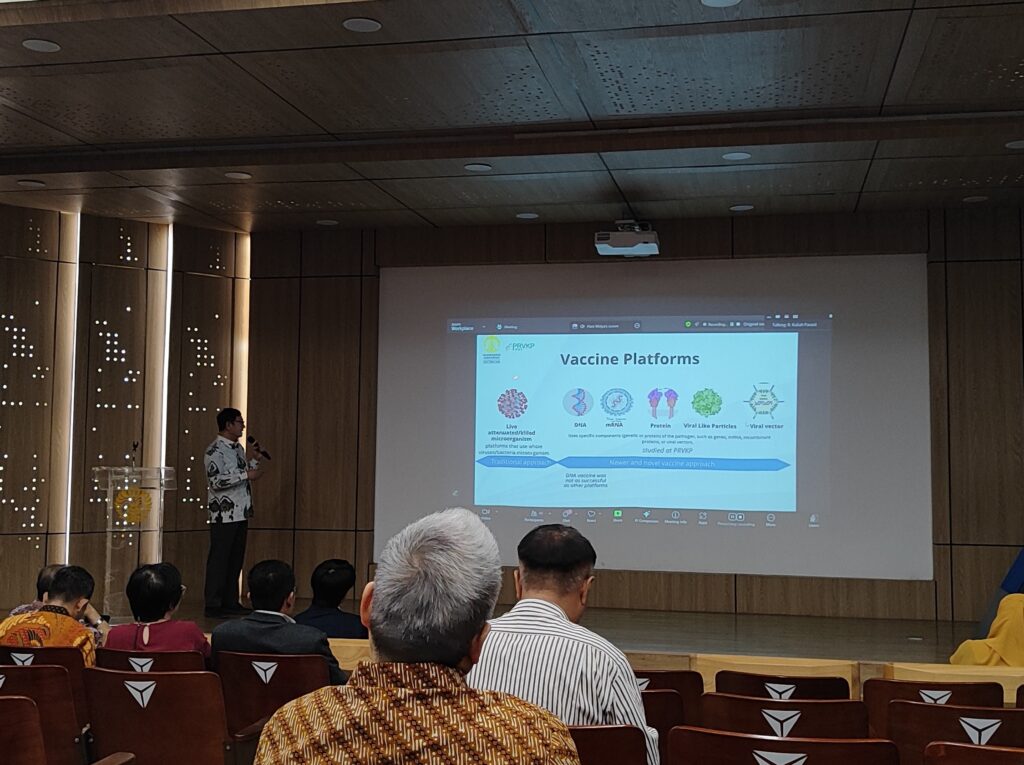
On October 8, 2025, the Department of Parasitology, Faculty of Medicine, Universitas Indonesia (UI), held a seminar titled “Recent Perspectives in Malaria Vaccine Development.” The event shared the latest research on malaria vaccines, including insights from experts at Bio Farma, UI, and Kanazawa University, Japan. Discussions highlighted that malaria prevalence remains high in eastern Indonesia, and that local clinical trials are needed to test existing vaccines, such as RTS,S and R21, which have been approved by the WHO but not yet studied in the Indonesian population.
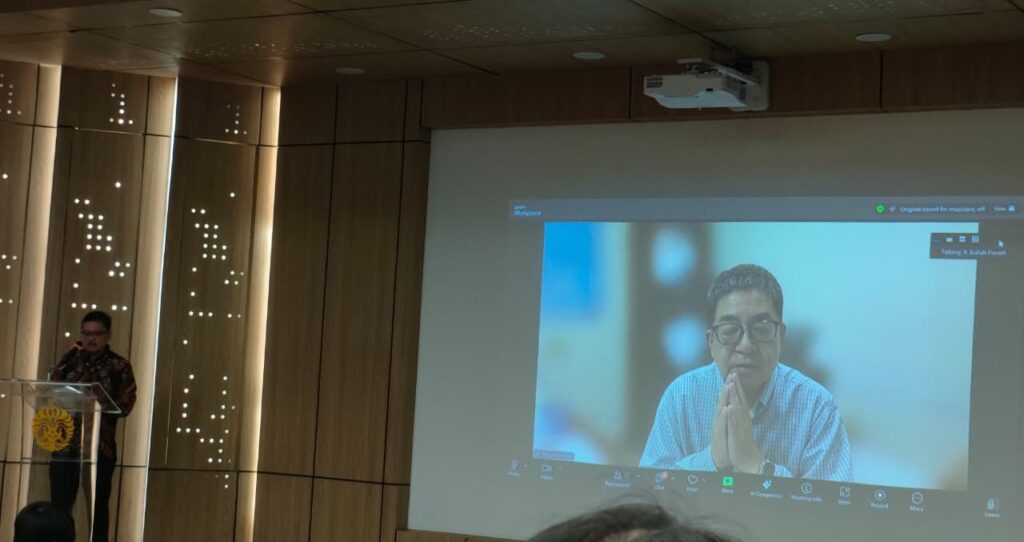
The seminar also showcased innovative vaccine approaches, including UI’s DNA-based vaccine utilizing cell-penetrating peptides, Bio Farma’s mRNA vaccine development, and a trivalent DNA vaccine from Kanazawa University that may soon be tested in Indonesia. Through this exchange, researchers and students gained new perspectives on malaria prevention and strengthened collaborations to support Indonesia’s contribution to global malaria elimination efforts. EHI believes that in the end, continued collaboration, innovation, and knowledge-sharing will be key to developing an effective malaria vaccine and achieving a malaria-free future.